Main menu

  • About
    • Leadership
    • Our Team
    • Vision, Mission and Values
    • Health and Economic Impact
    • Strategic Plan
    • News and Stories
    • Careers
  • Research
    • Research Focus
      • Brain Health
      • Cancer
      • Digital Health
      • Healthy Aging and Mobility
      • Heart Health
      • Immune System
      • Injury and Rehabilitation
      • Lung Health
      • Mental Health and Substance Use
      • Other Research Focus Areas
    • Research Centres and Programs
      • BC Centre on Substance Use
      • Centre for Aging SMART
      • Centre for Clinical Epidemiology and Evaluation
      • Centre for Lung Health
      • Dilawri Cardiovascular Institute
      • Djavad Mowafaghian Centre for Brain Health
      • International Collaboration On Repair Discoveries
      • M. H. Mohseni Institute of Urologic Sciences
      • Ovarian Cancer Research Centre
      • Community Research Program
      • Emergency Medicine Research Program
      • Hematology Research Program
      • Skin Research Program
    • Research Cores
      • Clinical Trials Platform
      • VCH-VCHRI AI Hub
      • Indigenous Health Research Unit
    • Researcher Directory
    • Events and Workshops
    • Participate in Research
  • Research Services
    • New to VCHRI
      • Working at VCHRI
      • Regulations and Training
      • Membership with VCHRI
    • Research Development
      • Awards and Funding
      • Research Facilitation
      • Grant Management
      • Learning and Development
    • Contracts and Compliance
      • Contract Facilitation at VCHRI
      • Operational Approval
      • Research Privacy
      • Clinical Trials Administration
    • Research Support
      • Communications and Media Relations
      • Financial Policies and Procedures
      • VCH-VCHRI AI Hub
    • Internal Awards
    • Clinical Research
    • Indigenous Research
  • Clinical Trials
    • Clinical Trials Platform
      • Phase 1 Clinical Trials Research Unit
      • Hematology Research Unit
      • Clinical Research Unit
    • Find a Study
    • Researcher Directory
  • Participate in Research
    • Reasons to Participate
    • Participant Stories
    • Find a Study
    • Recruitment Support

User menu

  • Log in

Breadcrumb

  1. Home
  2. Research
  3. Participate in Research
  4. A day in the lab: Human Locomotion Research Lab

A day in the lab: Human Locomotion Research Lab

Stories Feb 17, 2020 3 minutes

Research staff and students put their best foot forward in the study of human locomotion.

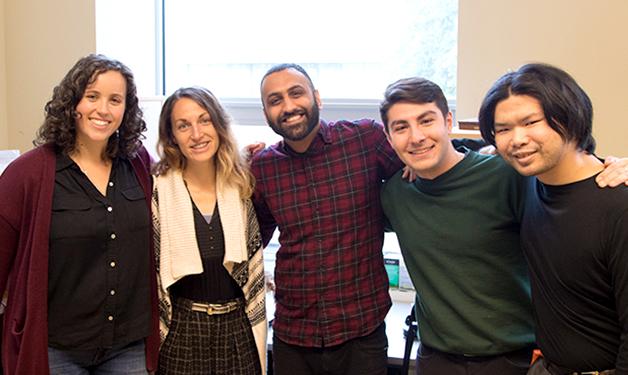
Lab members put research in motion. (L-R) Alison Williams, Emily Deegan, Raza Malik, Gevorg Eginyan and Mason Chow

At the International Collaboration on Repair Discoveries (ICORD) research centre, members of Dr. Tania Lam’s laboratory are studying human locomotion and walking recovery in an effort to improve people’s functional health outcomes and quality of life following a spinal cord injury (SCI). 
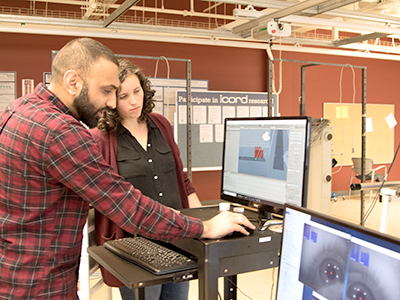
There is never a dull moment in the lab as staff and students undertake a wide range of responsibilities such as working with research participants, collecting data, conducting analyses, putting together grants, writing manuscripts and more.

With tasks and priorities changing to meet the needs of each project, Dr. Lam inspires her staff to gain experience in as many aspects of research as possible. 

“Dr. Lam trains her researchers to be independent and well-rounded in their skillset,” says research manager Alison Williams. “She ensures that everyone working in the lab feels confident in tackling all stages of the research process.”

The team’s goal is to advance knowledge and understanding of the human nervous systems, which will inform researchers’ efforts to develop new rehabilitation interventions for people who have experienced a neurological injury that affects their ability to walk. New rehabilitation approaches for patients may lead to better health outcomes and improved quality of life for people living with an SCI.

“The Blusson Spinal Cord Centre really is a community,” says PhD student Raza Malik. “Aside from being in the lab, we get to work in the Physical Activity Research Centre. That allows us get to know the SCI community and engage with people who could participate in our studies.”

A unique aspect of the lab is that it is able to accommodate the researchers’ diverse scientific interests and allows them to pursue a variety of research questions about the relationship between the nervous system and movement. 

The lab engages in research with the latest technologies like the robotic exoskeleton that assists people with standing up and walking. Williams is currently using the device in her research to learn how walking can train the pelvic floor muscles and ultimately improve bladder control. 
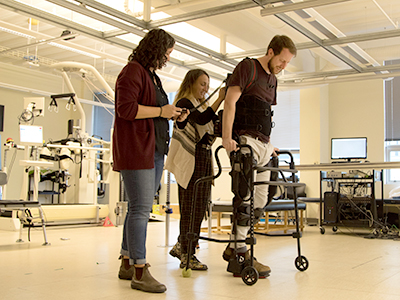
Alison Williams and Emily Deegan demonstrate use of the robotic exoskeleton walking device with VCHRI Community Outreach Coordinator Marc Saunders.

Another technology-based study is using virtual reality (VR) technology to look at the influence of peripheral vision to accomplish movement. This study will enable researchers to examine what people pay attention to in the space in which they walk. 

For this study, participants wear a VR headset while walking in a virtual environment. Through their work, the researchers hope to better understand the role of vision in walking and eventually develop new rehabilitation interventions for people with partial paralysis. The study has also allowed staff to compare who has the best eye lashes, thanks to the eye movement tracking camera inside the VR goggles.
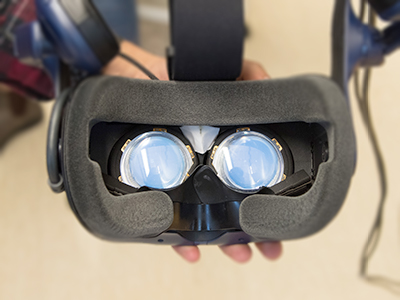
Customized by lab members, the VR headset has a camera inside to track users eye movements as they move through the VR environment.

Despite being a busy lab, the team always finds time for a coffee break–whether that be trying a new coffee brewing method or going for a quick walk to a cafe nearby. 
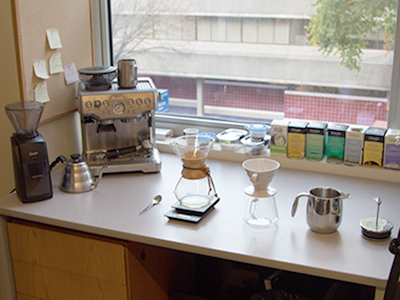
The research team takes coffee very seriously and has an impressive set up to maintain all their caffeine needs.

“We have a lot of fun as a group and these mini breaks give us a time to chat not only about our research, but to get to know each other as well,” says Williams. “We are all so fortunate to have the opportunity to work and study here at ICORD.”


Researchers

Tania Lam

Related Articles

Behind the lab doors: Driving cancer diagnostics at the Artificial Intelligence in Medicine Lab

Behind the lab doors: Investigating blood biomarkers as a window into brain health at Wellington Laboratory

Behind the lab doors: Breaking barriers with assistive technologies at MATTERS Lab

Share:

  • Facebook
  • Linkedin
  • Twitter
  • Instagram
  • Email

Related Research Centres/Programs

International Collaboration on Repair Discoveries

Get the latest research headlines in your inbox

Subscribe

Recent News and Stories

Type
Stories

Ask an expert: How can I strike a healthier balance with my daily habits?

Sep 10, 2026 exercise, mobility
Type
Stories

Moving endometrial cancer prevention upstream

Sep 8, 2026 women, cancer, uterine
Type
Stories

Improving respiratory protection for wildland firefighters

Sep 3, 2026 lung, environment, safety
See more news

Get updates!

Join our newsletter mailing list to stay up to date on features and releases.

Subscribe

Quick Links

  • News and Stories
  • Careers
  • Events
  • Media Enquiries

Follow Us

  • LinkedIn
  • Instagram
  • Bluesky
  • YouTube

© 2026 VCHRI. All rights reserved.

  • Contact
  • Privacy Policy