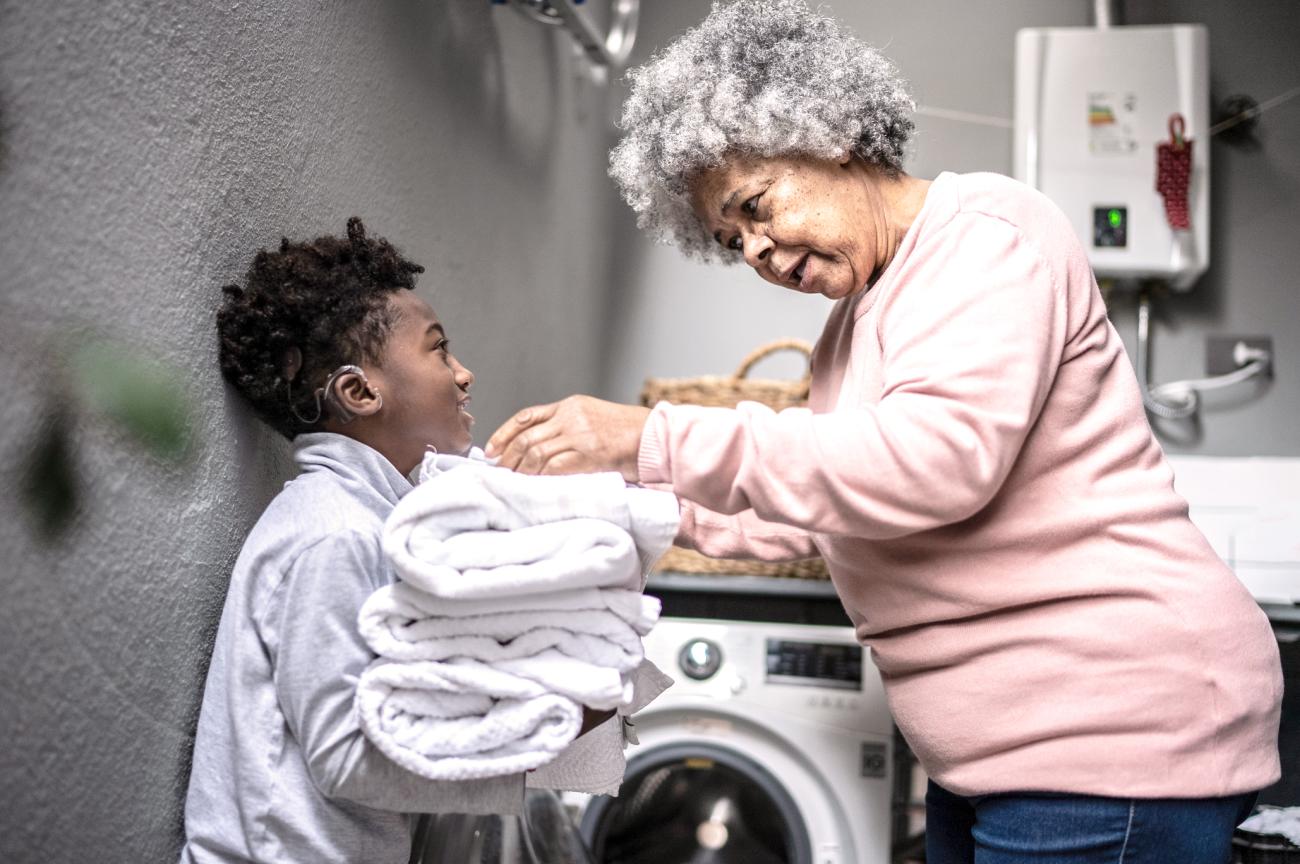
Our speech-language pathologist expert explores the complexities of acquired communication disorders in older adults.
For this year’s Speech and Hearing Month in May, VCHRI researcher and speech-language pathologist Gillian O’Toole explains how communication disorders and hearing loss can impact quality of life for older adults. She also shares interventions to support caregivers, clinicians and loved ones in improving communication health.
Q: How does age-related hearing loss impact older adults with acquired communication disorders?
A: Acquired communication disorders can affect an individual’s understanding of language and their ability to use speech and language to express themselves. People with neurodegenerative diseases, spinal cord injuries (SCIs) or acquired brain injuries (ABIs) may struggle with the nerves and muscles needed for speech, making it difficult to communicate their needs and engage in conversation. People with ABI, such as from stroke or traumatic brain injuries, may also have trouble understanding others, leading to difficulties processing language.
When hearing loss is added to a communication disorder, it can complicate matters further. Hearing loss may distort the sound signal, making it even harder to understand speech. As part of the diagnostic process, speech-language pathologists screen hearing loss in older adults with acquired communication disorders to inform the management of both communication and hearing. Hearing loss can also affect an individual’s ability to hear their own speech and use communication strategies effectively. They will then consult an audiologist to determine best management options for hearing loss.
Q: How might age-related hearing loss affect older adults’ communication if they don’t have an existing acquired communication disorder?
A: Research indicates a bidirectional relationship between age-related hearing loss and cognitive decline, which can lead to communication difficulties. Age-related hearing loss may accelerate cognitive decline due to a lack of sensory input or stimulation, negatively impacting brain health. This could result in reduced activation in brain areas crucial for cognitive functions, such as memory formation.
Q: How does your research work to improve the lives of people with acquired communication disorders?
A: My qualitative study focuses on the lived experience of people with swallow dysfunction, or dysphagia, particularly their choice-making and beliefs around the risks of aspiration and potential of development of aspiration pneumonia. I included participants with varying communication needs due to the high incidence of dysphagia and dysarthria (disordered speech production) among them.
To ensure inclusivity, I provided one-on-one training for interviewers on how to communicate with participants using different methods, such as verbal communication, picture or letter boards, speech-to-text programs, or having a familiar communication partner who is trained in supporting their communication or a mix of these. Some participants also had hearing loss, requiring a quiet environment or hearing aids.
Including people with communication disorders in qualitative research promotes communication access and gives them a voice to help others, regardless of how they communicate. I hope to continue investigating the inclusion of people with various communication disorders in research.
Q: What are some general strategies caregivers, clinicians or loved ones can use to better communicate with people with communication disorders?
A: Effective listener strategies include:
- Asking your communication partner about their preferences. For example, do they need a quieter environment, louder speech or for you to write down a key word for them?
- Clearly establishing the topic of conversation to provide context.
- Speaking louder, but not slower, as slowing down too much may distort the signal and make understanding harder.
- Confirming that your communication partner understood your message.
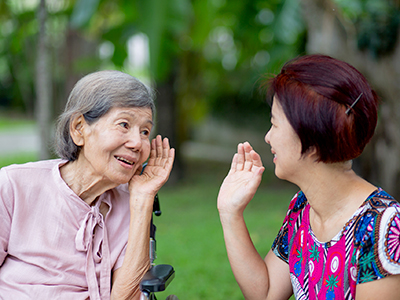
Q: What are helpful ways of communicating with people living with hearing loss?
A: People living with hearing loss can use speaker strategies to advocate for their needs and ensure the proper use of their hearing devices, such as:
- Requesting to communicate in a quiet environment to maximize the signal.
- Using prescribed hearing aids or other devices, like a pocket talker.
- Informing their communication partner when they don’t understand or need something repeated.
- The above strategies may also be used by communication partners by offering to move to a quieter setting, speak louder not slower, and confirm that their message was heard.
As a speech-language pathologist, I always consult an audiologist to determine the best way to manage an individual’s hearing loss and identify any evidence-based interventions that could benefit them. The new Clinical Practice Guideline for age-related hearing loss also provides helpful resources for communicating with partners and clinicians.